

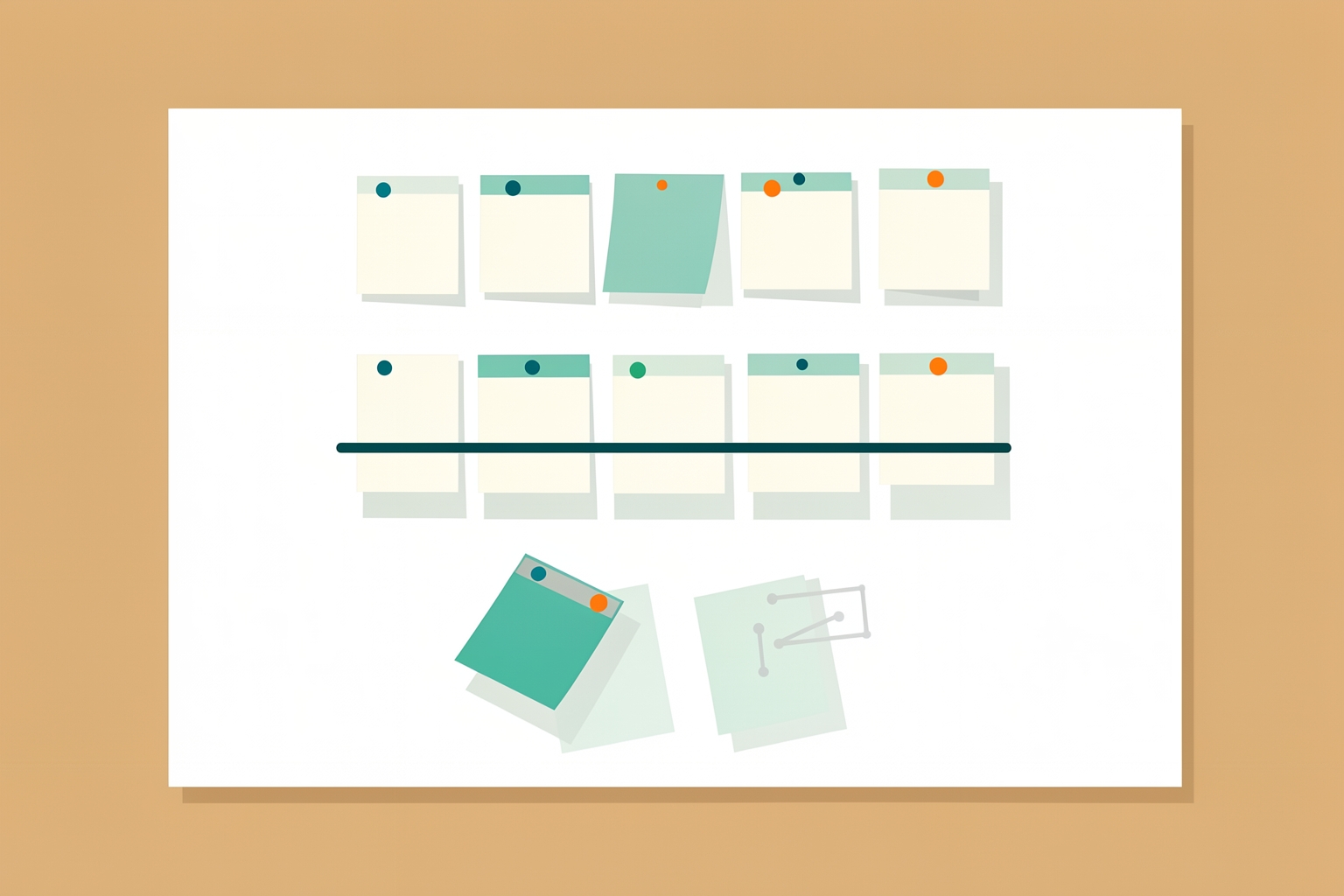
Why team prioritization exists at all
Every team eventually faces the same wall: a long list of tasks, limited time, and no shared agreement about what matters most.
The question is not whether prioritization is useful.
It is whether the team should do it together, in a structured session, or let individuals sort their own work.
This guide helps you decide when a group prioritization session is worth running, when to skip it, and how to run one well if you choose to.
Looking at a laundry list of everything on a team's plate can feel overwhelming.
That is the problem a team prioritization session solves.
Atlassian documents a play for this exact situation, designed to help a team agree on priorities and define where it is okay to delay or drop tasks Atlassian Team Playbook.
The documented goals are specific.
The play helps a team prioritize the right tasks and execute them in the right order to eliminate bottlenecks.
It also empowers the team to say no to low-priority work that could delay the project Atlassian Team Playbook.
Without a shared reference point for decisions, Atlassian notes, a team will just end up thrashing about.
People work on what looks urgent to them individually.
Dependencies get missed.
Someone spends a week polishing something nobody needed while a blocking task sits untouched.
When running a team prioritization session makes sense
Run a session together when most of these conditions are true:
- Multiple people will touch the same tasks, so order matters across the team, not just within one person's day.
- Some tasks depend on others, and getting the order wrong creates rework or waiting.
- The team disagrees, or would disagree, about what counts as important.
- Stakeholders keep adding requests mid-project, and the team needs a documented basis for saying no.
- Shared understanding or velocity is already a concern for the team.
That last point comes directly from Atlassian's guidance: if you are struggling with shared understanding or velocity, running this play might help .