

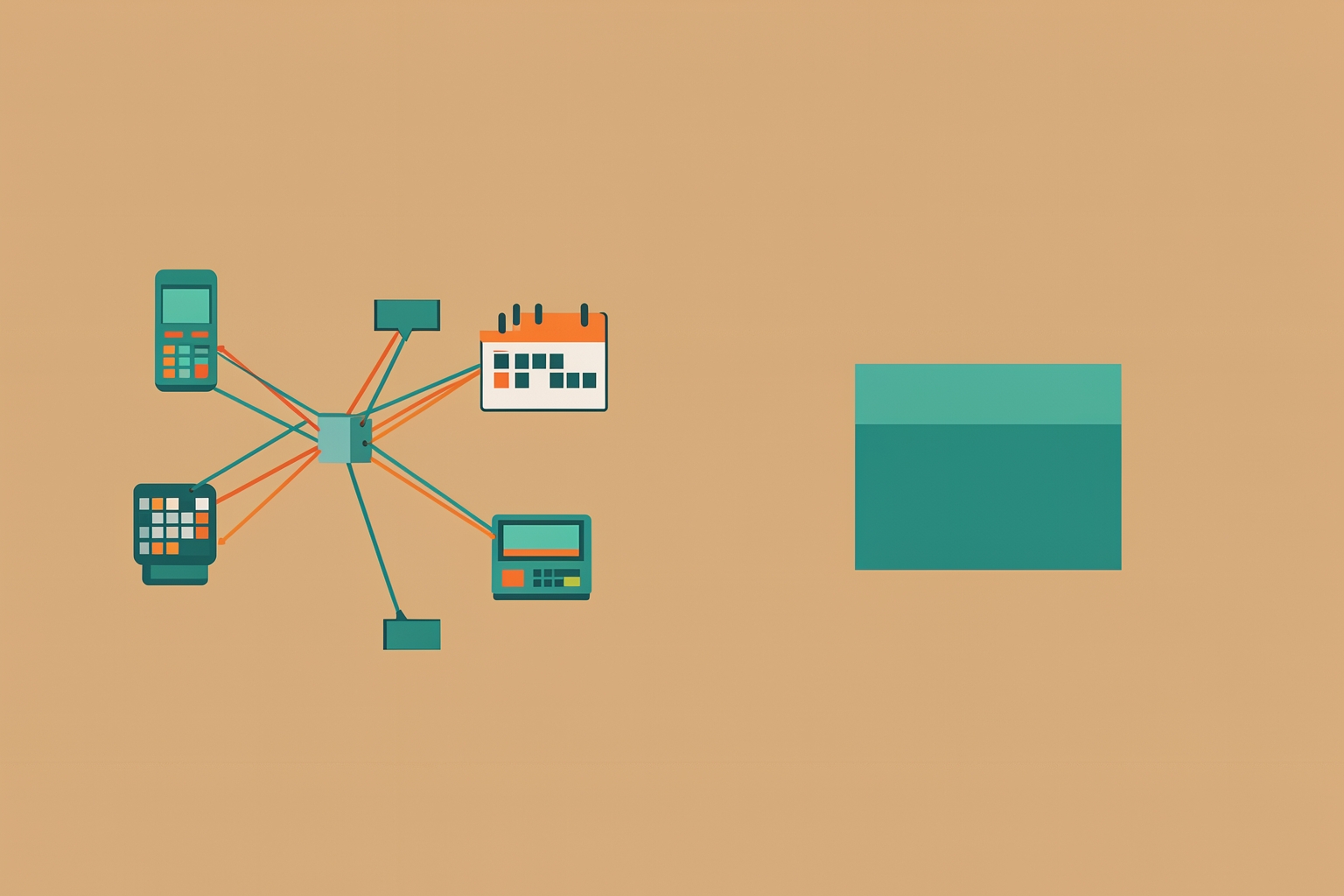
What dependency mapping actually is
Every project has hidden strings attached.
A payment feature depends on a vendor's API.
A launch date depends on a teammate's availability.
A community project depends on a partner's approval.
The question is not whether dependencies exist, but whether you find them before they find you.
This guide helps you decide whether to run a dependency mapping session before your project starts, and shows you a simple one-hour way to do it if the answer is yes.
Dependency mapping is a structured session where a team writes down everything outside the project that could affect it, or be affected by it.
Atlassian's Team Playbook says the exercise helps teams uncover anything that might impede their project's success.
It also helps them understand impacts on others and plan to head off trouble early.
Their documented format runs about sixty minutes with two to twelve people.
The output is not a fancy chart.
It is a short list of systems, risks, and named owners, plus a review rhythm.
That is the whole deliverable, and it is enough to change how a project goes.
When mapping is clearly worth the hour
Some situations make the decision easy.
Map dependencies first when most of these are true:
- Your project touches systems other people own, such as a shared database, a payment provider, or a design system.
- Other teams' work depends on your output, so delays on your side ripple outward.
- The timeline is fixed by something external, like an event, a contract, or a seasonal window.
- Several people or teams are involved, and nobody has spelled out who owns what.
- You have been burned before by a surprise that a short conversation would have surfaced.
In these cases, an hour of mapping is cheap insurance.
Atlassian's guidance is blunt: discuss potential risks ahead of time and have a plan in place.
That beats discovering them during a critical phase of the project.
When you can reasonably skip it
Mapping is not a ritual you owe every project.
You can usually skip or shrink it when:
- You are working alone on a small, self-contained task with no external handoffs.
- The project is a deliberate experiment where the point is to learn fast, and the cost of being wrong is low.