

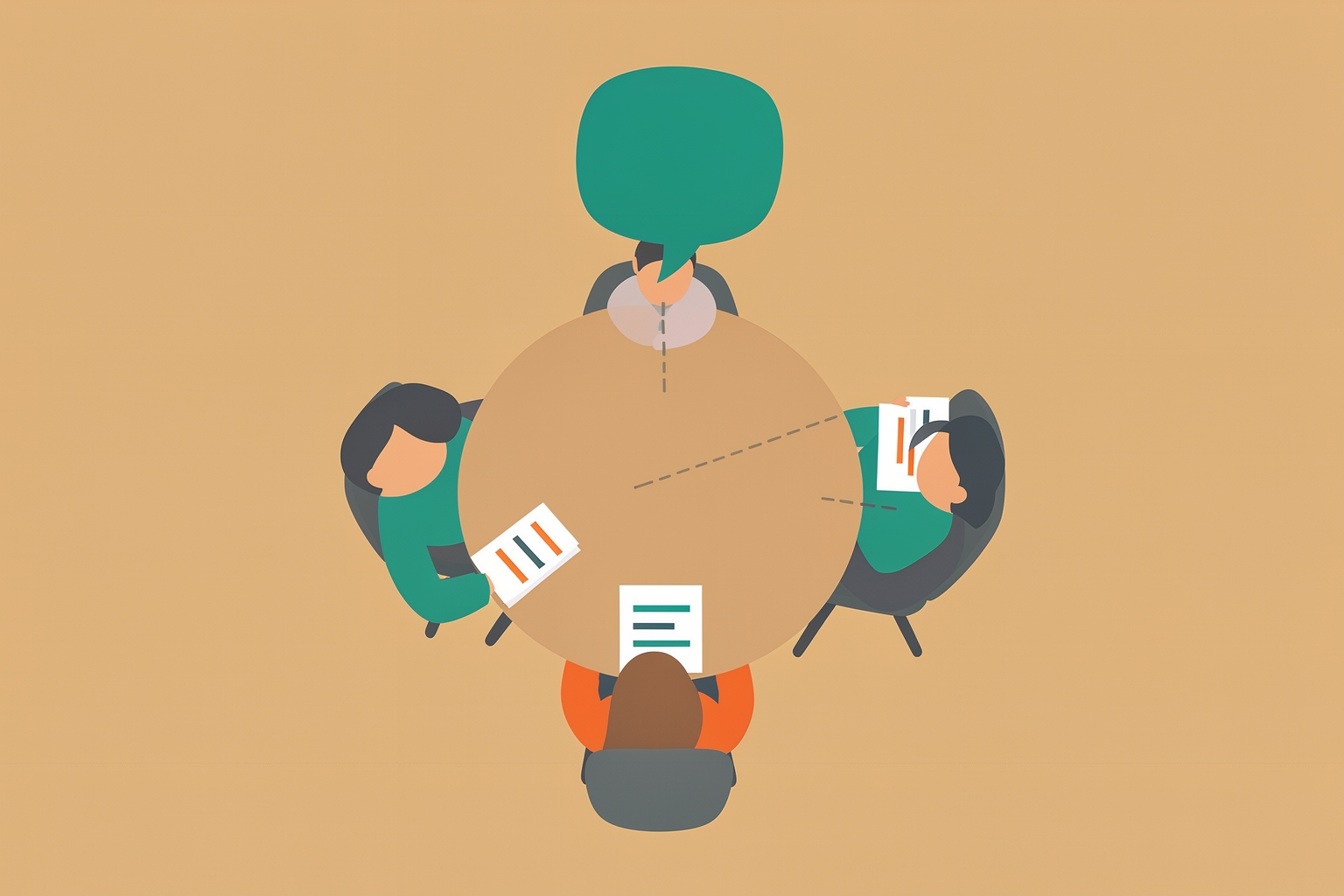
Why quieter members stay quiet
Some of your best thinkers rarely talk in meetings.
They listen, process, and often have the sharpest observation in the room, but the loudest voices fill the airtime first.
If you only hear from the people who speak fastest, you are making decisions on partial information.
This guide explains when structured participation helps, which techniques work, and where structure can backfire.
The goal is not to force anyone to perform.
It is to make sure quieter team members have a genuine, low-pressure path into the conversation.
People hold back for different reasons, and the fix depends on the cause.
Some need time to process before they can contribute.
Some worry about being interrupted or talked over.
Some assume the dominant speaker already covered their point.
And some simply prefer to contribute in writing or one-on-one.
Atlassian's inclusive meetings play notes that introverts often need time alone to process new information before doing their best work Atlassian Team Playbook.
It suggests proactively soliciting ideas afterward, asking whether anyone has had a new insight since you met.
That reframes silence: it is often a processing style, not disengagement.
The practical implication is that a single technique will not fit everyone.
You need a small toolkit and a willingness to vary it.
Should you structure participation at all?
Structure helps most when a few people consistently dominate, when remote attendees struggle to get a word in, or when decisions stall because dissent never surfaces.
It helps least when the group is small, trusting, and already balanced, or when the meeting is a fast-moving brainstorm where rigid turns would kill momentum.
A useful test: look at your last few meetings.
If the same two or three people produced nearly every spoken contribution, structure will probably help.
If contributions vary naturally and decisions stick, light-touch habits may be enough.
Structure also carries a cost.
Turn-taking slows discussion, and some people find formal rounds uncomfortable.
The tradeoff is airtime equity versus speed and spontaneity.
You can adjust the dose: use structure for decision meetings and keep open discussion for casual check-ins.