

What an icebreaker actually does
Your first team meeting sets a tone.
Someone suggests an icebreaker.
Someone else groans.
You have a decision to make: run one, or skip it and get straight to work?
This guide gives you a practical way to decide.
It covers when icebreakers genuinely help, when they waste time, and how to run one that people do not resent.
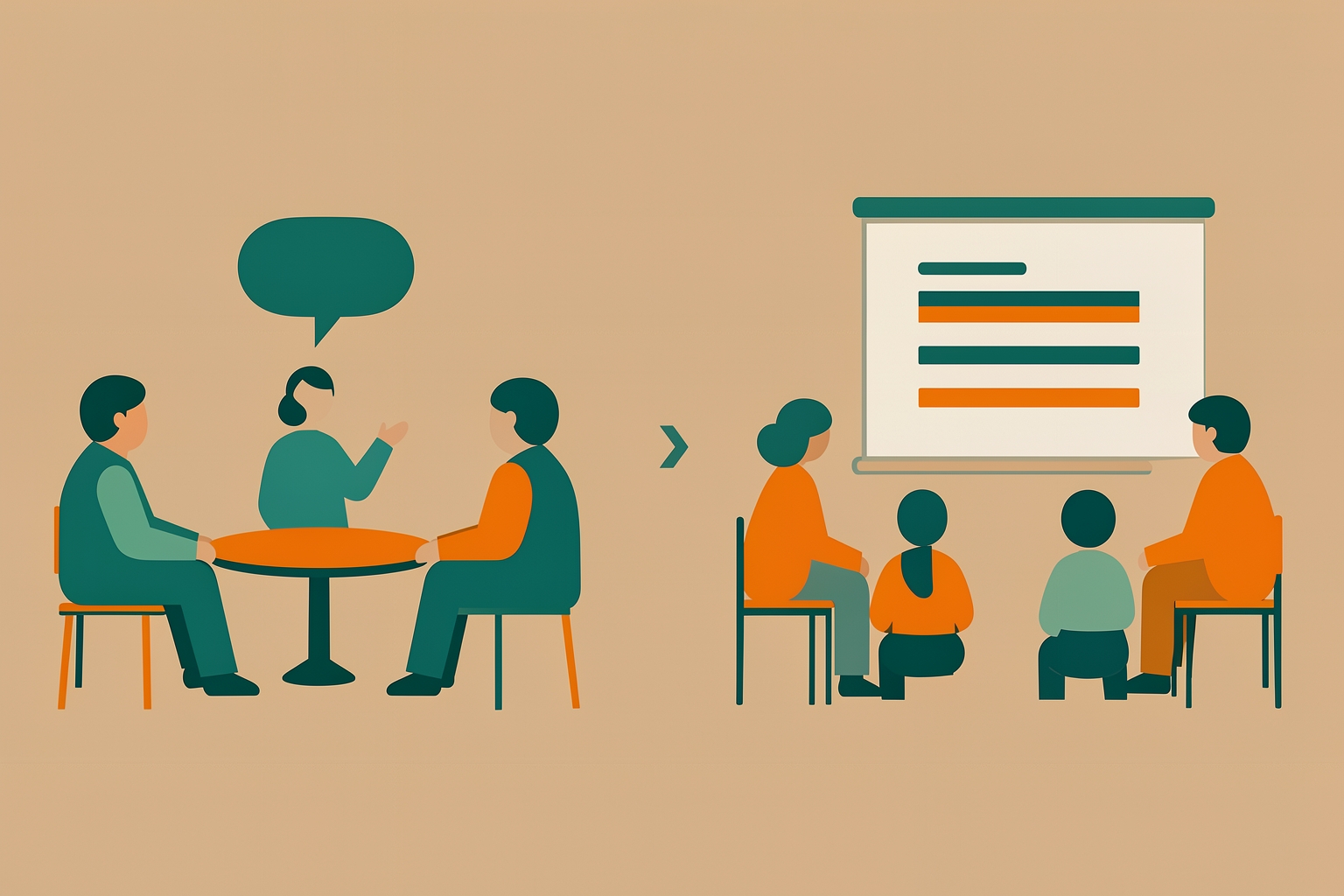
An icebreaker is a short, structured activity at the start of a meeting designed to get people talking to each other about something other than the agenda.
It can be as simple as a round of questions or as involved as a small game.
Atlassian's Team Playbook describes icebreakers as exercises that foster communication, establish rapport, and create a relaxed atmosphere Atlassian Team Playbook.
They range from simple introductions to more engaging games that encourage interaction.
The key word is structured.
An icebreaker is not small talk.
It is a deliberate prompt with a clear format, a time box, and a reason it belongs in that specific meeting.
Why the first meeting is different from later ones
In a first meeting, people are deciding how much of themselves to bring.
If nobody speaks in the opening minutes, they are less likely to speak at all later.
Susan Cain makes this argument in Quiet , and Atlassian cites it as a reason to use icebreakers Atlassian Team Playbook.
They suggest using them in the first five minutes of a meeting to encourage participation later.
That matters most when the group is new.
A first meeting with strangers has no shared history, no inside jokes, and no established rhythm for who talks when.
The silence after your opening slide is not rudeness.
It is uncertainty.
Atlassian also notes that icebreakers are not only for unfamiliar groups.
Familiar teams use them to feel more comfortable speaking up and contributing Atlassian Team Playbook.