

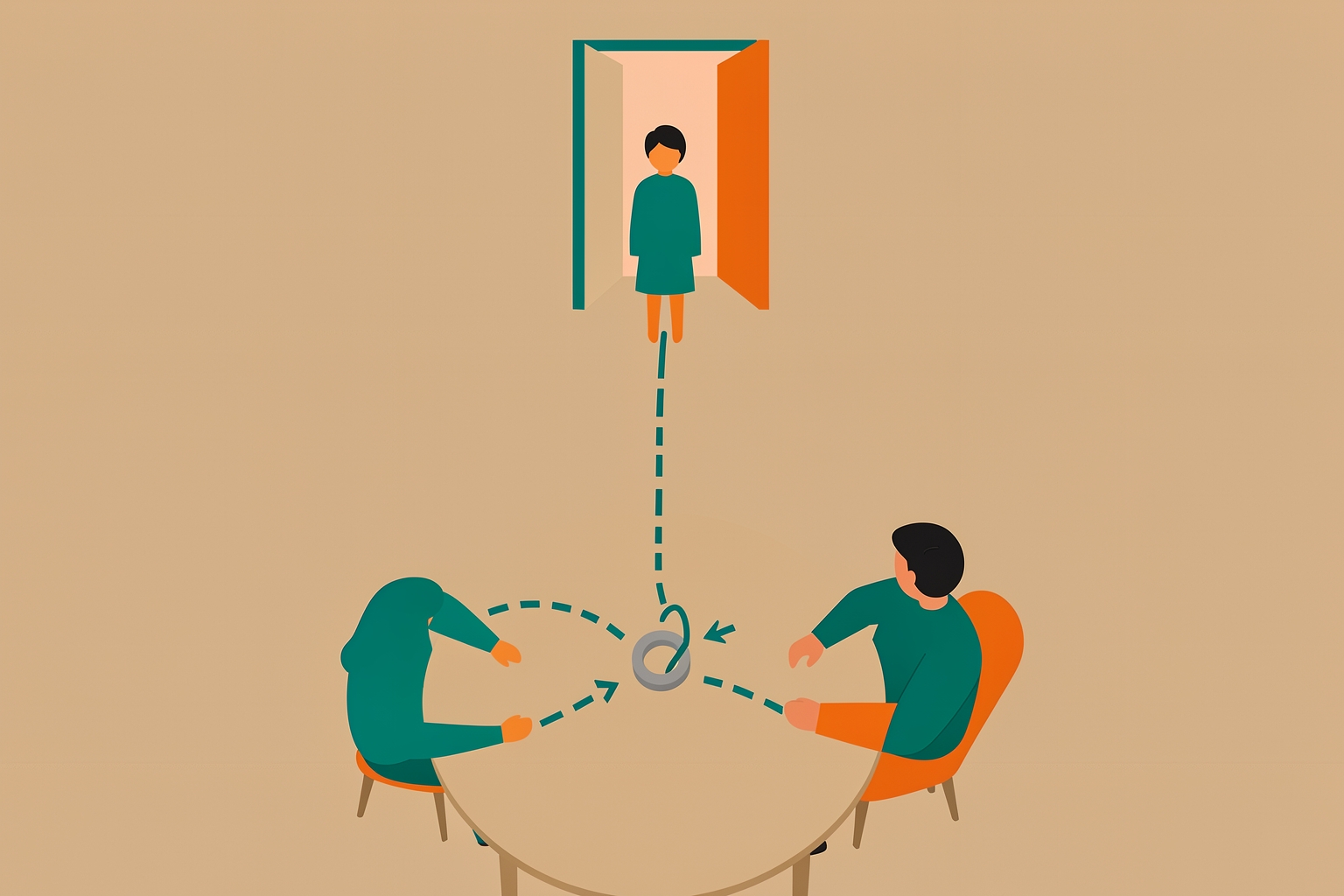
Why escalation feels risky but usually is not
Stuck decisions are quiet productivity killers.
Two people keep talking in circles, a deadline slips, and nobody wants to be the one who says the uncomfortable thing out loud.
Knowing when to escalate a decision at work is a skill, not an admission of failure.
Done well, it reduces uncertainty, shortens delays, and protects the relationships you were worried about damaging.
This guide covers the signals that a decision is ready for escalation, a clean four-step process, and scripts for raising issues without making it personal.
The process draws on Atlassian's clean escalations play (Atlassian Team Playbook).
It is designed to unblock teams stuck on decisions, conflicts, or issues and to establish a rational, collaborative escalation path.
Most people avoid escalating because they think it signals weakness.
You might feel like you are letting your team down by raising a problem.
Atlassian's guidance points out the opposite (Atlassian Team Playbook).
Not escalating can leave you frustrated, hurt team morale and velocity, and may be detrimental to your products and customers.
Escalating openly and rationally reduces uncertainty, delays, and damaged relationships (Atlassian Team Playbook).
The damage usually comes from how escalation is done, not from the act itself.
A weaponized escalation assigns blame.
A clean escalation hands a well-framed decision to the right person and invites the other party into the conversation.
Signals it is time to escalate
There is no universal timer, but these patterns are reliable indicators that informal effort has stopped working:
- The same disagreement keeps resurfacing. You have discussed the options more than once and keep landing in the same place.
- Data is imperfect and staying that way. Atlassian's example scenario describes two product teams who talked through options for weeks without deciding because they did not have enough data. Waiting for perfect information is often the reason decisions stall .