

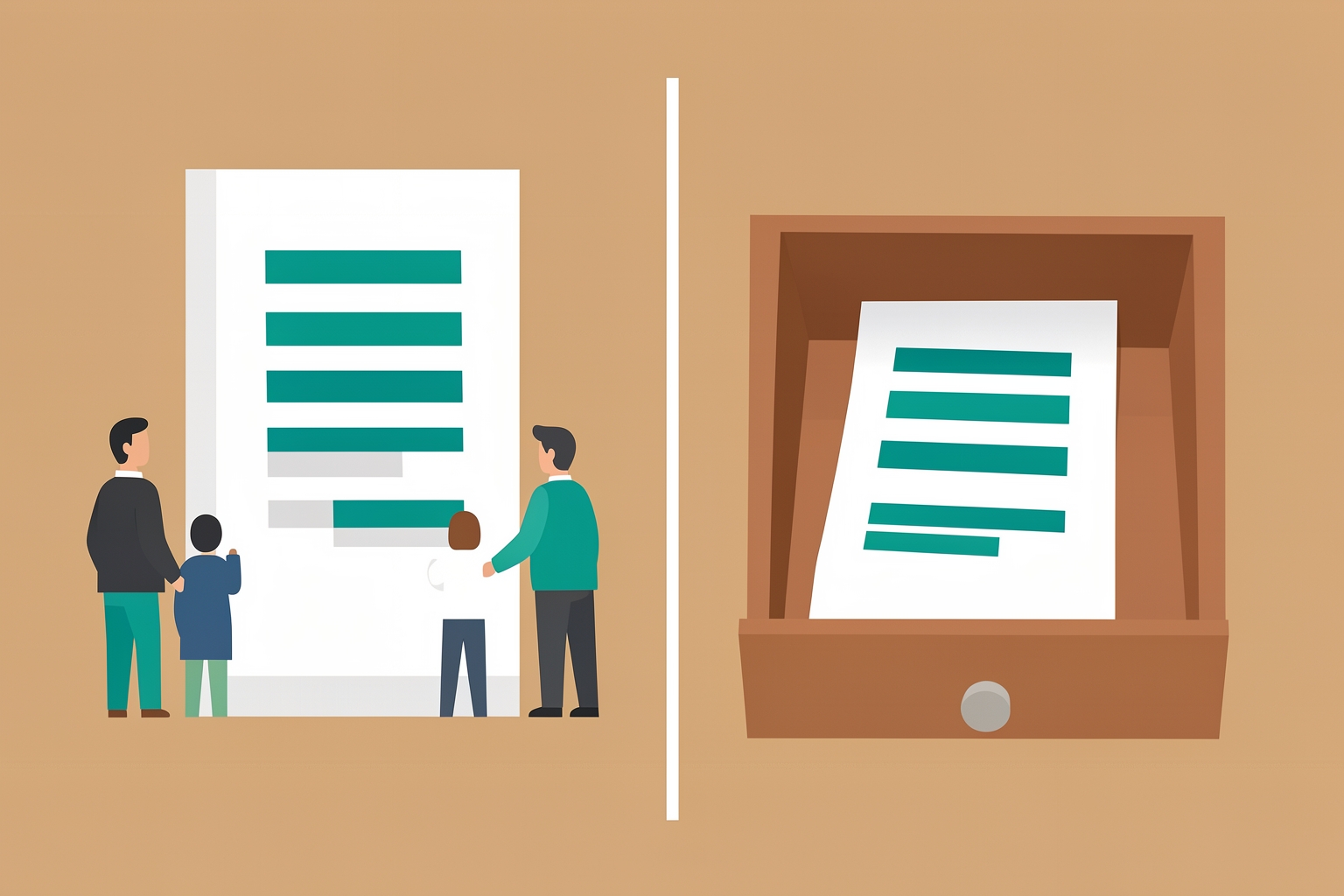
What a personal user manual actually is
A personal user manual is a short document explaining how you work: your hours, preferred communication channels, feedback style, and best working conditions.
The idea is popular in team playbooks.
Atlassian describes it as a way to share your working style so teams collaborate more easily Atlassian Team Playbook.
But is it right for you right now?
This guide walks through the situations where a manual earns its keep, the situations where it does not, and what a good first draft actually contains.
Think of it as instructions for working with you.
Atlassian defines it as a document outlining an individual's work style, preferences, strengths, and communication habits Atlassian Team Playbook.
It is not a resume, a performance review, or a personality test result.
It is practical: when should people ping you, how should they deliver criticism, and what do you need to do focused work?
The format is deliberately flexible.
Atlassian encourages people to make the template their own, saying nobody should be pressured to share anything they are not comfortable sharing Atlassian Team Playbook.
That last point matters more than most guides admit.
A manual full of answers you felt forced to give helps nobody.
When creating one makes sense
Atlassian recommends creating a user manual when joining a new team, taking on a leadership role, or starting a project that requires close collaboration.
It also suggests them for team-building activities or when communication issues arise Atlassian Team Playbook.
Those map well onto real situations:
- You joined a new team. Everyone is still guessing at your norms. A manual shortens that guessing period.
- You now manage people. Reports cannot read your mind about feedback style or availability, and guessing wrong is costly for both sides.
- You are starting a tight-collaboration project. If you will be in daily contact with people you do not know well, upfront clarity prevents friction.
- Communication problems keep repeating. If colleagues keep interrupting your focus time or delivering feedback in ways that land badly, a written reference gives you a calm, non-accusatory way to reset expectations.
- You work asynchronously. When most contact is written and delayed, stating your response-time expectations and channel preferences removes a lot of anxiety.
Atlassian suggests an onboarding habit: assign new hires the task of creating and presenting their user manual within their first 90 days Atlassian Team Playbook.
If your team already does this, writing yours is not a question — it is an expectation.
When to skip it or wait
A manual is not always the right next move.
Consider waiting if:
- Nobody asked and nothing is broken. If your current collaboration works, the document may just sit unread. That is wasted prep time.
- You cannot answer the prompts honestly yet. If you are new to working professionally, or new to remote work, you may not know your own preferences. Guessing produces a manual that is wrong within a month.
- The team context makes disclosure risky. In some workplaces, stating your needs in writing can be used against you. Atlassian's framing assumes a safe space where nothing shared will be used against anyone Atlassian Team Playbook. If that safety does not exist on your team, keep the document private or skip it.
- The real problem is structural. If your team's friction comes from unclear goals, unclear roles, or too many meetings, a personal manual will not fix it. Team-level agreements address those problems better.
One more honest caveat: a manual describes preferences, it does not enforce them.
Writing 'please do not message me after 6pm' changes nothing if the team culture ignores it.
The document works when paired with a team willing to respect what it says.
What to include in your first draft
Atlassian's template groups prompts into a few areas: work setup and hours, communication preferences, feedback style, values, and achievements Atlassian Team Playbook.
You do not need every section.
A useful starter set:
- Work setup. Where you work from and the hours you keep.
- Communication. The best and worst ways to reach you, and which channels you prefer for what.
- Feedback. How you like to receive it, and in what format.
- Focus conditions. What helps you do deep work, and what disrupts it.
Atlassian suggests a lighter first pass: limit the template to working hours, ideal environment, communication preferences, and learning styles Atlassian Team Playbook.
That is a sensible default if you are unsure how much to share.
Keep it short.
A page is plenty.
If your manual takes longer to read than a coffee chat would take, you have written the wrong document.
An illustrative example
Here is what a trimmed first draft might look like.
This is an illustrative scenario, not a real person's manual:
Work setup: Remote, mostly mornings. Core hours roughly 9 to 5, but I batch replies twice a day. Communication: Async written messages for anything that can wait a day.
Call me only for urgent or emotionally loaded topics. Please do not expect instant replies on chat.
Feedback: Direct and specific, in writing first so I can process it, then a short conversation. Public praise is fine; public criticism is not. Focus: Mornings are deep-work time.
If something is truly urgent before noon, call — do not wait.
Notice the decisions embedded in it: channel choices, response expectations, and one clear boundary.
Each line answers a question a colleague would otherwise have to guess.
Tradeoffs worth weighing
- Time cost. Atlassian estimates about 30 minutes to prep a manual and a meeting of roughly an hour to share manuals across a team Atlassian Team Playbook. That is real time, and it competes with actual work.
- Maintenance. Preferences change. A manual written during one job may be wrong at the next. Plan to revisit it when your role or setup changes.
- Oversharing risk. Prompts about values and proudest achievements are optional. Sharing only what serves collaboration keeps the document professional and safe.
- Uneven participation. If only some people write manuals, the ones who do can feel exposed. It usually works better as a team norm than a solo gesture — though a solo manual is still better than silence when communication is strained.
A simple decision path
- Is communication friction or onboarding confusion actually happening? If no, skip for now.
- Do you trust the team enough to share preferences safely? If no, keep it private or wait.
- Are you joining a team, stepping into leadership, or starting close collaboration? If yes, write one this week.
- Start with the light version: hours, environment, communication, feedback. Expand only if it earns it.
- Share it where people will actually see it, and revisit it when your situation changes.
The bottom line
Create a personal user manual when you are new to a team, stepping into leadership, or entering close collaboration.
It also helps when fixing recurring communication friction, provided the team is safe enough for honest answers.
Skip it when nothing is broken, when you cannot yet answer the prompts truthfully, or when the real problem is structural.
Start small, share it where it will be read, and treat it as a living document rather than a one-time exercise.
Take the next step with Ideoreto. Use the ideas in this guide as a starting point for your next project.
Register for Ideoreto to get started.