

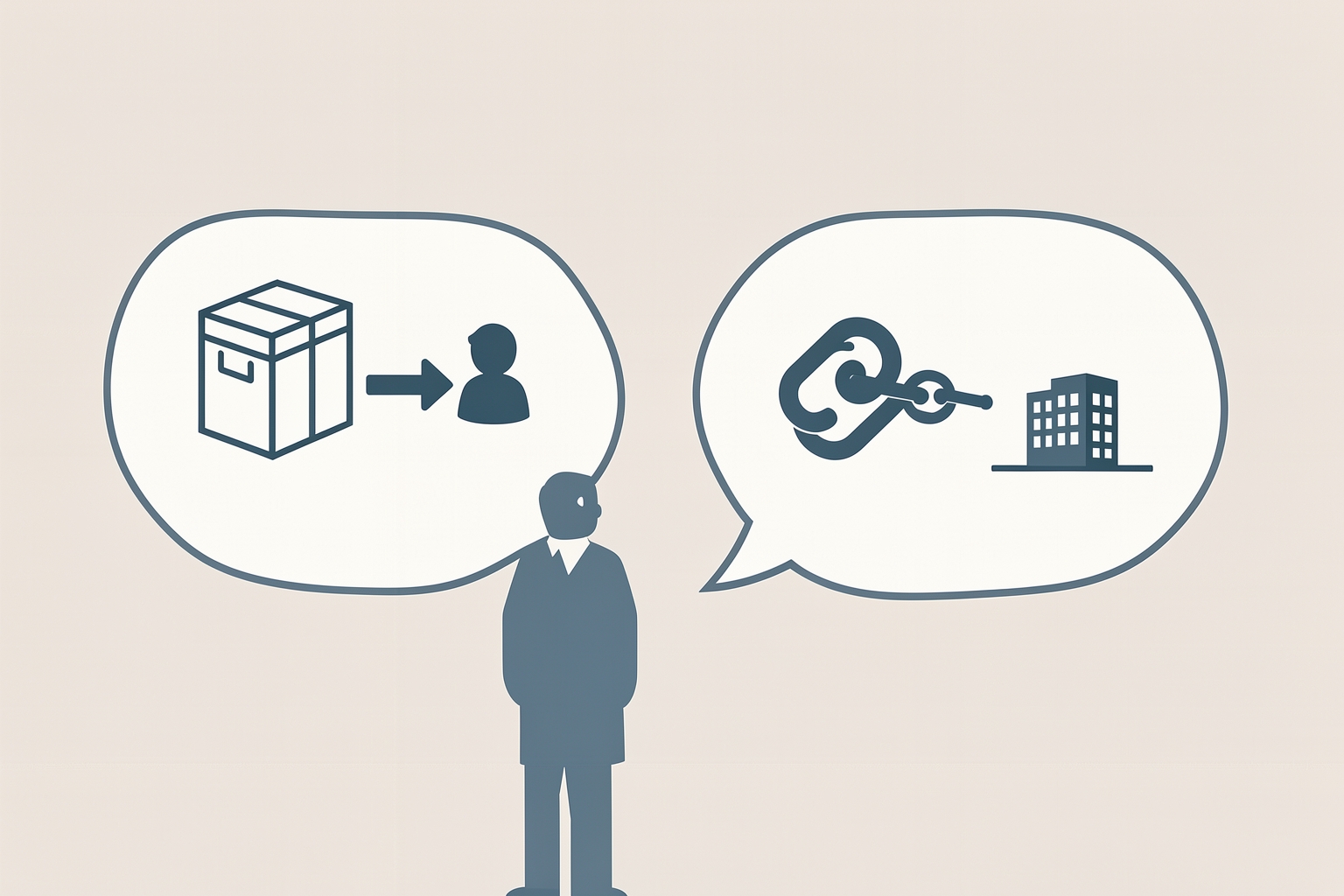
Why the analogy temptation is so strong
You get one sentence to explain your startup.
Someone asks what you do.
You can describe the product plainly, or reach for an analogy like 'it's Uber for dog walkers.'
Both can work.
Both can also fail badly.
This guide walks through when an analogy helps, when it hurts, and how to test whether your explanation is actually clear.
Analogies feel powerful because they transfer a whole mental model in a few words.
If your listener knows Airbnb, 'Airbnb for equipment rentals' seems to explain your business model, trust mechanics, and user experience in one breath.
That compression is genuinely useful when it works.
The problem is that analogies only compress when the listener's mental model of the reference company matches yours.
If they think Airbnb means 'staying in strangers' homes,' but you meant 'a marketplace with reviews, payments, and idle assets,' you communicated something unintended.
You inherit all their assumptions, including the wrong ones.
There is also a credibility cost.
Investors and experienced operators have heard thousands of 'X for Y' pitches.
When the analogy is doing all the work, it can signal that you have not thought carefully about what makes your situation different.
A borrowed frame invites the question: if it is really just Airbnb for something else, why hasn't someone already done it?
What a plain description actually requires
A plain description is harder to write than an analogy, which is exactly why people avoid it.
You have to name the specific problem, the specific people who have it, and what your product does about it, without hiding behind jargon or borrowed fame.
Michael Seibel of Y Combinator puts the bar plainly: eliminate jargon, acronyms, marketing speak, and ambiguous terms like 'platform.'
His advice is to make your explanation sound 'dumber than you think it should,' because clarity, not cleverness, is what you are being judged on How to Pitch Your Company.
He also notes that you do not need to sound cool.
You need to be clear.
A useful plain description usually answers three things in order:
- Who has the problem, stated concretely enough that a listener can picture a person.